

Why Some Oklahoma City Homes Look Like Good Deals — But Aren’t
You come across a listing that looks like a steal. The price is lower than everything else nearby. The photos look great. Maybe the projected rent looks strong too. It looks like you found something other people missed.
We see this often with Oklahoma City rental owners who purchase properties based on projected numbers without fully accounting for maintenance timelines, leasing friction, or deferred capital expenditures after turnover.
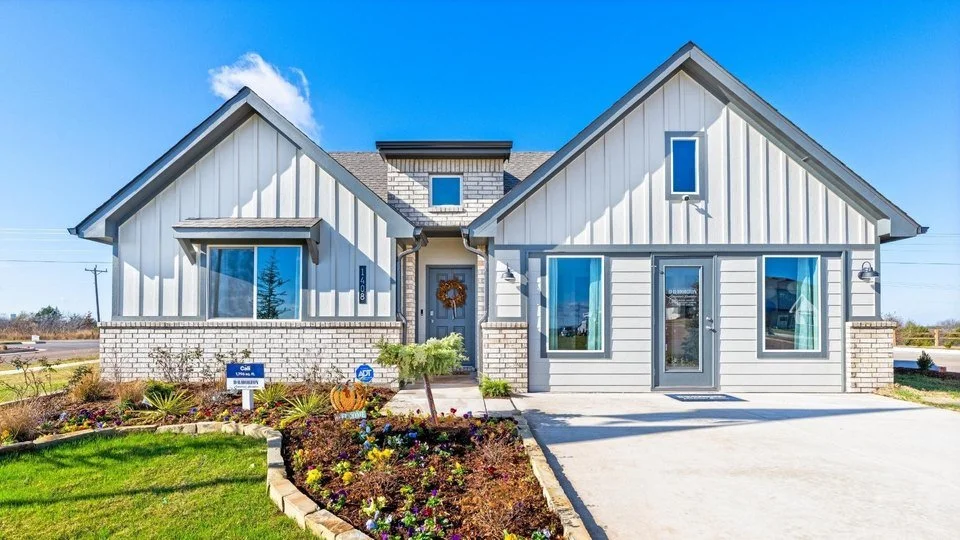
Most of the time, you didn’t find a hidden gem you found a trap.
Listen to This Article

The Anatomy of a "Bad Deal"
Why Deals Fall Apart
Low price doesn’t mean good value
A lower price tag is often a signal for investors looking for equity. In the Oklahoma City market, that discount usually represents a pre-calculated cost for a problem the seller is choosing not to fix.
Properties sitting 15% below comps aren't necessarily overlooked; they're often accurately priced for their risk profile. If you aren't accounting for the functional obsolescence of a 1950s layout or the eventual replacement of a legacy HVAC system, you aren't getting a deal. You are simply deferring a necessary expense.
The real math happens in the maintenance you can't see on a listing. Understanding property management fees in Oklahoma City is just the baseline for protecting your margins.
Price Anchor Traps
- Ignoring location drawbacks for a "good price"
- Discounting functional limitations (layout issues)
- Under-budgeting for deferred maintenance
DEAL AUTOPSY: The Margin Trap
The Setup: Investor bought a 3/1 in SW OKC for $130k. Appraised at $155k.
The Reality: Foundation movement required $14,000 in piering. A subsequent cast iron plumbing failure cost $9,500.
Outcome: $23,500 in capital work removed the paper equity and stalled cash flow for 24 months.
Income gets overestimated
A proforma is a sales document, not an operational budget. In the Oklahoma City metro, we see investors over-indexing on NW OKC rents and applying them to pockets in Del City or Warr Acres that don't have the same demand profile.
Small miscalculations are silent killers for cash flow. If you're off by $200 a month on a $1,500 rental, you haven't just lost $2,400 a year—you've potentially reduced your net yield by 50% after operational costs.
Market knowledge is everything. Buying in Norman without understanding student turnover cycles can result in a 60-day vacancy that wipes out your annual profit. Real ROI is found in sustainable rent levels, not aggressive projections.
AUDIT SUMMARY
Projected vs. Actual Analysis
| Metric | Projected | Actual |
|---|---|---|
| Monthly Rent | $1,850 | $1,575 |
| Vacancy Rate | 5.0% | 11.0% |
| Total CapEx | $4,000 | $23,500 |
| Net Cap Rate | 7.0% | 4.2% |
*Data reflects forensic audit of a legacy NW OKC asset with structural settlement and cast iron failure.
Expenses get underestimated
Oklahoma clay soil is an operational fact of life. Foundation movement is a structural certainty in the metro area. If you aren't auditing the "invisible" infrastructure, you're exposing yourself to high-velocity repairs.
We see inspections in Midwest City that miss root-intruded clay pipes under the front yard. A general inspector often overlooks this; a specialized sewer scope is required. Shortly after closing, a buyer may face an $18,000 main line replacement. In the OKC climate, you must be surgical about roof inspections and conservative about plumbing life cycles.
The OKC "Invisible" Expense List
- Foundation Piers (Clay soil movement)
- Midwest City Sewer Scoping ($10k-$20k risk)
- Roof Aging (Hail/Wind storm damage)
- Norman Student Turnover Caps
No downside planning
Buying based on an ideal scenario is a risk. Markets can correct, and roofs often hit their expiration date earlier than expected due to OKC hail cycles.
If a deal requires perfect execution to stay profitable, the margin for error is too thin. Successful OKC property management requires a "Stress Test." If the numbers don't hold up when you add two months of vacancy or a major capital event, the risk may outweigh the reward.
A simple way to filter deals
You don’t need a complicated model to filter out most bad deals. You just need to be honest about a few things: Is there a clear, realistic use for the property? Does it actually make sense financially? How long will it realistically take to execute?
Having a consistent way to run through those assumptions makes it much easier to spot issues early.
Professional Deal Audits
A sustainable portfolio is built on verified data. If a property looks like an outlier, there is usually a reason. We help you identify those risks before they hit your balance sheet.
Share This Analysis
Found this useful? Help other Oklahoma City investors by sharing this guide.




FAQs on Deal Analysis
Explore More Guides

Sources & References
- Oklahoma Geological Survey — Oklahoma clay soil and foundation movement data
- HUD Fair Market Rent Documentation — Oklahoma City rental benchmark methodology
- NOAA Storm Prediction Center — Oklahoma hail and severe weather trends
- Oklahoma Housing Finance Agency Payment Standards — OKC-area rent/payment benchmarks
Comments
Comments are moderated before appearing publicly.